
The New American Pantry

How Latin American Culture Is Becoming What Americans Eat
A Mexican lager became the best-selling beer in America. A chili-lime seasoning sits next to the table salt. This is not a niche. It is the mainstream and it is only beginning.
For a generation, the food industry treated Latin American flavor as a category — a shelf, a section, a multicultural line item. That framing is outdated.
The country's top-selling beer by dollars is Mexican. Its fastest-growing seasonings are chili-lime. Its biggest pop star headlined the Super Bowl almost entirely in Spanish.
None of this is happening to Latino consumers in isolation. It is happening to everyone.
This paper is about what’s driving that shift, the cultural principles underneath it, and what it means for anyone who makes, sells, or markets food.
Three Wells of Insight and Inspiration
| Well | What it captures | Headline signal |
|---|---|---|
| Innovation Inspiration | Products, formats, flavors, and rituals influencing mainstream categories | Tajín, birria, horchata, aguas frescas, chamoy/swicy going mass-market; PepsiCo buys Siete for $1.2B |
| Design Inspiration | Aesthetics, storytelling, creators, and cultural expression shaping brands | Bad Bunny headlines Super Bowl LX in Spanish; Latin music hits record $1.4B; Modelo is #1 beer |
| Consumer Insight | Emerging Jobs to Be Done, tensions, and behaviors pointing to future growth | Gen Z’s flavor-adventure default; food-as-connection; convenience without losing authenticity |
Latin America as an Innovation Engine
Latin American flavors, ingredients, formats, and rituals are no longer ethnic line extensions.
They are crossing into mainstream CPG, QSR, foodservice, beverages, and dairy as default options. The clearest tell: legacy giants are now buying Latino-founded brands and reformulating core menus around Latin flavor.
1.1 Tajín and the chili-lime takeover
Description. Tajín — a mild chili, lime, and sea-salt seasoning from Guadalajara — has become the top-selling chili-lime seasoning in both Mexico and the U.S., with more than 60 million bottles of its Clásico blend sold globally each year. It now appears in retail, foodservice, and QSR, with Taco Bell and 7-Eleven featuring it on menus and a 2025 Fresh Gourmet line of Chile-Lime croutons, pepitas, and masa strips bringing the flavor into the salad and snack aisles.
Why it matters. Tajín is the gateway flavor for the broader “swicy” and tart-chili movement. It trains the mainstream palate to expect chili-lime as a flavor system applicable across fruit, snacks, beverages, and even cocktails — a platform, not a single SKU.
Evidence of mainstream adoption. Cross-category licensing (Fresh Gourmet croutons/ pepitas), national QSR features, and a documented rise in chili-lime and tart profiles across condiments and beverages. McCormick naming aji amarillo its 2025 Flavor of the Year signals the same directional pull at the category-leader level.
Source. TODAY (today.com); Fresh Gourmet Company; Accio market trends; McCormick investor releases.
1.2 Birria’s leap from regional dish to national format
Description. Birria — a slow-braised stew from Jalisco served with consommé for dipping — has gone from regional specialty to a national menu phenomenon: birria tacos, quesabirria, birria ramen, even birria pizza. Datassential names it among the defining food trends of the past decade, alongside avocado toast and gochujang.
Why it matters. Birria proves the mainstream will adopt not just a flavor but a whole eating ritual — the dip, the pull, the shareable messiness that performs on video. It is a format and a social mechanic, which is why it travels across QSR, fast-casual, and fine dining simultaneously.
Evidence of mainstream adoption. “World stage” soups and stews led 2024 menu trends; 70% of operators report rising demand for global flavors, and 47% of consumers ate a globally influenced dish in the past week (up from 28% in 2017).
Source. Datassential (Global Flavors); National Restaurant Association / Prepared Foods 2024 menu trends.
1.3 Horchata and aguas frescas enter the beverage core
Description. Starbucks launched an Iced Horchata Oatmilk Shaken Espresso nationally in May 2025; Peet’s and Stumptown carry horchata oat lattes. In parallel, aguas frescas have become a beverage platform: better-for-you brands like Bawi, Kern’s horchata-flavored drinks, and spiked versions from Modelo Spiked Aguas Frescas, Topo Chico Aguas Frescas Hard Seltzer, and Calidad.
Why it matters. Horchata and aguas frescas give big beverage a familiar-yet-novel flavor language — cinnamon, rice, hibiscus, tamarind, watermelon, cucumber — that fits both the better-for-you and the indulgence agendas. When Starbucks and Constellation both commit, the flavor has crossed into the core, not the margin.
Evidence of mainstream adoption. National Starbucks rollout; multiple major-brand seltzer launches (Constellation/Modelo, Coca-Cola/Topo Chico); emerging premium agua fresca brands modernizing ingredient decks and packaging.
Source. Starbucks Stories; Beverage Industry special report; Brewbound; Constellation Brands.
1.4 Chamoy, tepache, and the “swicy” platform
Description. Chamoy (pickled-fruit, chili, lime condiment), tepache (fermented pineapple), tamarindo, guava, and prickly pear are powering the sweet-heat-tart “swicy” wave. Datassential reports nearly 10% of restaurant menus now feature swicy items, projected to grow ~9.6% over four years; the global hot-sauce market is valued at ~$3.79B in 2025, heading toward $7.75B by 2034.
Why it matters. Swicy is the connective tissue between Latin flavor and Gen Z’s documented preference for intense, layered taste. It is showing up in candy, snacks, beverages (BeatBox Chillitas), and even college foodservice (mango-chamoy ice pops) — a flavor logic, not a single product.
Source. Perfumer & Flavorist (Scoville Surge); Synergy; Whole Foods 2025 trend predictions; Beverage Industry.
1.5 Peruvian and tropical ingredients premiumize the pantry
Description. Aji amarillo was named McCormick’s 2025 Flavor of the Year and is increasingly stocked in mainstream grocery; lucuma, quinoa, purple corn, and ceviche have moved toward household familiarity. Tropical profiles — mango, guava, passionfruit, hibiscus — anchor the better-for-you beverage set.
Why it matters. Peruvian and tropical ingredients let brands premiumize and add a wellness halo while staying on-trend with Latin flavor. Aji amarillo’s Flavor-of-the-Year status is a leading indicator: McCormick is forecasting where the broad menu goes next.
Source. McCormick; Chifa Du Kang; Calle Sol; Packaged Facts.
1.6 Big CPG votes with its checkbook
Description. In January 2025 PepsiCo completed its $1.2B acquisition of Siete Foods, the Mexican-American maker of grain-free tortillas, chips, and sauces that generated ~$500M in revenue. Siete joins Lay’s, Doritos, Gatorade, and Quaker.
Why it matters. This is the single clearest signal that Latin-rooted, better-for-you food is now a strategic growth platform for the largest players — not a multicultural side bet. It also models the winning formula: authentic Latino founder story + modern health positioning + mainstream distribution.
Source. PepsiCo press release; KVUE; Inc.; Food Engineering.
Latin America as a Design & Culture Engine
Latin culture is shaping the aesthetics, storytelling, and brand expression of mainstream America — through music, creators, sport, and packaging. For food and beverage, this matters because flavor adoption follows cultural permission: when Latin music, artists, and visual language are everywhere, Latin flavor reads as aspirational rather than foreign.
2.1 Bad Bunny and the Spanish-language mainstream
Description. At Super Bowl LX (Feb 8, 2026), Bad Bunny became the first Latino solo artist to headline the halftime show — and performed almost entirely in Spanish, to 128.2 million domestic viewers (the fourth-most-watched halftime ever). The set staged Puerto Rican daily life: barbershops, bodegas, dominoes, elders, family.
Why it matters. Spanish-language and Latino cultural imagery is now the center of the single biggest mainstream-American stage. McKinsey projects Latinos will account for one-third of total U.S. sports-market growth by 2035. For brands, this is the permission structure: bilingual, culturally specific expression now reads as mass-market, not niche.
Source. NPR; Hollywood Reporter; Temple University; CNN.
2.2 Latin music as cultural infrastructure
Description. Latin music hit a record $1.4B in U.S. revenue in 2024 (RIAA), its third straight year above $1B and the ninth consecutive year outpacing the overall market; streaming is 98% of it. Mexican música (corridos tumbados, sierreño, etc.) is the most-streamed Latin genre in the U.S., dominant in 26 states, with global streams up 31% year over year. Peso Pluma ranked as the #2 Latin artist and #7 global artist on Spotify in 2024.
Why it matters. Music is the fastest carrier of aesthetic and language across demographics.
The artists driving it — Bad Bunny, Peso Pluma, Karol G, Feid, J Balvin — are also brand- makers, anchoring beverage, beauty, fashion, and QSR collaborations that pull Latin visual culture into adjacent categories.
Source. Billboard / RIAA 2024 Year-End Latin report; NBC News; Spotify Wrapped 2024.
2.3 Modelo: the clearest commercial proof point
Description. Modelo Especial became the best-selling beer in the U.S. in 2023 — the first time a Mexican import has held the top spot — and has retained leadership. Hispanic consumers drive ~50% of its sales, but its authentic cultural positioning travels across all demographics.
Why it matters. Modelo is the textbook case of culture-led brand growth: heritage-true storytelling (“La Vida Más Fina,” long-running Corona/Bad Bunny work at the portfolio level) plus broad cross-over appeal. It demonstrates that leading with Latin authenticity is a mainstream growth strategy, not a segmentation play.
Source. CNBC; Fox Business; Marketing Dive; Constellation Brands.
2.4 Where it shows up in F&B branding
- Artist-led beverage: Corona x Bad Bunny (“La Vida Más Fina”); Modelo Spiked Aguas Frescas partnering with Latina talent (Francia Raisa) and honoring street-vendor culture.
- Heritage cues going premium: modern agua-fresca and horchata brands using cleaner decks and elevated packaging that signal craft and authenticity rather than nostalgia.
- Street-food storytelling: Topo Chico Aguas Frescas explicitly invoking taqueria and street-market origins as a premium narrative.
- Visual language: marigold, chili-red, and hand-drawn / mercado-inspired design migrating into mainstream snack and beverage shelves.
Latin America as a Source of Consumer Insight
Beneath the products and the music sit behaviors and tensions that are spreading into mainstream culture. These are the richest territory for brand strategy because they translate directly into Jobs to Be Done. Below, each insight is framed as a tension, the job it implies, and where the opportunity sits.
3.1 Food as joy and social connection
Consumer tension. Mainstream eating has been optimized for convenience and efficiency, but people are starved for connection and presence at the table. Latino food culture consistently couples food with joy, togetherness, and nostalgia — roughly a third of Latinos emphasize the value of sitting around the table to share a meal.
Jobs to Be Done. “Help me turn an ordinary meal into a moment of togetherness”; “Give me permission to slow down and enjoy without guilt.” Opportunity implications. Shareable formats (birria spreads, build-your-own, dip-and-pull rituals), family-size and multi-generational packaging, and storytelling that frames indulgence as connection rather than transgression.
3.2 Flavor exploration as a default, not a dare
Consumer tension. Younger consumers feel that “mild” is boring and inauthentic yet still want approachable on-ramps. Latin flavor — chili-lime, swicy, tart-tropical — delivers intensity with familiarity.
Jobs to Be Done. “Let me explore boldly without getting it wrong”; “Make every-day eating feel like discovery.” Opportunity implications. Lead with heat-plus-sweet and tart; use Latin profiles as the bridge to broader global exploration; design for social-media discovery, which 84% of flavor-seekers cite as their top discovery source.
78% of Gen Z like or love spicy food. ~73% say they almost always try new flavors — far more than Gen X or Boomers. Flavor adventure is now the default setting of the next consumer majority.
3.3 Convenience without sacrificing authenticity
Consumer tension. Shoppers want the speed of packaged and frozen formats but refuse the “fake” taste and ingredient compromises of an earlier convenience era.
Jobs to Be Done. “Give me real, culturally true flavor in a grab-and-go format”; “Let me feed my family well on a weeknight.” Opportunity implications. This is precisely the Siete formula — authentic Mexican-American food, clean labels, mainstream distribution. Frozen birria kits, RTD horchata and aguas frescas, and better-for-you tortillas/snacks all sit in this gap. Authenticity + convenience is the winning intersection.
3.4 Hybrid identity and cultural blending
Consumer tension. Gen Z and Gen Alpha Latinos (and their peers) live fluidly across cultures and reject either/or identity. They want food that mirrors a blended, code-switching life.
Jobs to Be Done. “Reflect who I actually am — bicultural, fluent in everything”; “Surprise me with combinations that feel like my generation.” Opportunity implications. Fusion is not a gimmick but an identity statement. Bilingual, blended branding reads as authentic to the fastest-growing youth cohorts: 40% of Gen Z in the West identify as Hispanic; Hispanics are 26% of Gen Alpha.
3.5 Everyday indulgence, premiumization, and wellness ritual
Consumer tension. Consumers want small, affordable luxuries and “good-for-me” rituals at once. Latin culture offers both — café traditions, fresh-fruit aguas, and celebratory snacking — without the puritanism of wellness culture.
Jobs to Be Done. “Give me an affordable daily treat I can feel good about”; “Make my coffee / drink ritual feel special and rooted.” Opportunity implications. Horchata and Latin coffee rituals premiumize the daily café occasion; tropical and aji-amarillo profiles carry a natural wellness halo; “better-for-you” aguas frescas convert indulgence into permission. Position Latin flavor at the intersection of joy and wellness, not in opposition.
The Shift – Why Now?
Three driving forces converged.
- 1. The demographics became structural: Latinos now drive more than 70% of U.S. population growth, and 40% of Gen Z in the West is Hispanic.
- 2. The culture became aspirational: Latin music hit a record $1.4 billion in 2024, and Bad Bunny's Super Bowl set drew 128 million viewers to a performance staged almost entirely in Spanish.
- 3. And the palate became adventurous: 47% of Americans ate a globally influenced dish last week, up from 28% in 2017.
The flavors followed. Tajín crossed from the taquería to Taco Bell and the salad aisle. Birria leapt from regional stew to birria pizza and birria ramen. Starbucks put horchata on its national menu. And the institutions voted with their checkbooks: PepsiCo bought the Mexican-American brand Siete for $1.2 billion.
Seven Experience Principles
Seven principles recur across Latin American cultures. They are not trends; they are philosophies. And each one answers an unmet need in mainstream American life.
The most telling signals aren't products but experiences. In Miami, more than a thousand Cuban ventanitas turn 3:05pm into the city's official coffee daily ritual. In Costa Mesa, Northgate's Mercado González draws crowds to a 70,000-square-foot hall of food stalls modeled on the great markets of Mexico City. In Lima, Central was named the best restaurant on earth. Latin America is mainstreaming at both ends of the price ladder at once from the corner coffee window to the world's #1 restaurant.
Most brands still ask, “How do we market to Hispanic consumers?” The more powerful question is: “What is Latin American culture teaching all consumers to want?” Underneath the flavors sits something more durable than any trend: a set of experience principles — philosophies about joy, connection, abundance, and pleasure that mainstream America is hungry for. A flavor makes a product. A philosophy makes a product, a brand, a service, an experience, and a way of living.
- 1. Joy — food should delight. Latin American food never apologizes for pleasure. It's why Mexican cooking now earns Michelin stars, and why a dusting of chili-lime turns a cup of fruit into an event.
- 2. Connection — food brings people together. The table is the point, not the pit stop. As America rediscovers the value of gathering, Latin culture offers a model it never abandoned.
- 3. Abundance — generosity over restraint. More is love. Walk into a mercado and you feel a worldview, not a grocery run.
- 4. Exploration — boldness over safety. Bland is the real risk now. 78% of Gen Z love spicy food, and Peru's Central became the world's best restaurant by daring to map a whole country by altitude.
- 5. Fusion — mixing is natural. The next generation doesn't choose between cultures; it blends them. 70% of Gen Z Latinos call themselves bicultural — and they want food that is, too.
- 6. Everyday Celebration — ordinary moments deserve pleasure. Miami made 3:05pm its official cafecito break. A coffee at a walk-up window becomes a small, repeatable joy — pleasure democratized across the ordinary day.
- 7. Resourceful Beauty — vibrant beauty from humble means. Rasquachismo, the Chicano art of ingenuity — color, craft, and making-do — is an aesthetic the design world is finally celebrating, and a powerful alternative to sterile minimalism
How culture reaches the shelf
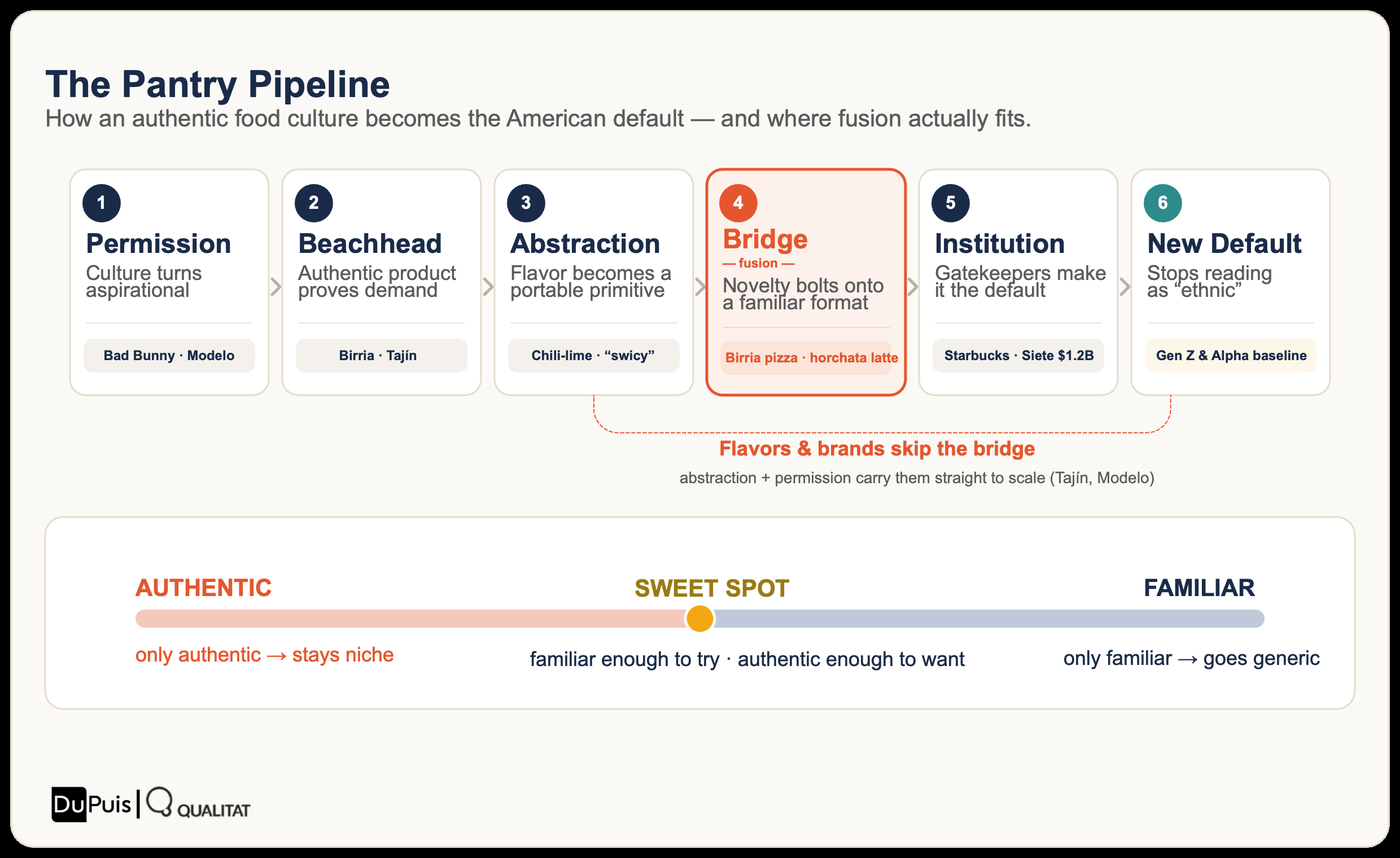
Authentic culture doesn't mainstream by accident. It travels a path — from the moment a culture becomes aspirational, to the flavors and rituals that prove demand, to the products that finally feel like the American default. We call it the Pantry Pipeline.
The detail of how a brand moves through that pipeline is the work we do with clients. But the shape of it explains our point of view simply: Qualitat sits at the source — close to where culture is forming in Latin America — and DuPuis sits at the shelf — close to where it lands in the U.S. mainstream. Source to shelf, we see the whole journey.
What it means for your brand
If Latin American culture is becoming the mainstream, the questions for brand and innovation leaders change.
- Are you translating a culture, or building from inside it? Audiences can tell the difference and increasingly reward only the second.
- Is your flavor a SKU, or a system? Chili-lime isn't one product; it's a platform that extends across snacks, drinks, dairy, and frozen. Are you building a roadmap?
- Are you selling a product, or hosting an occasion? Birria's dip-and-pull and the cafecito ritual prove that the experience travels faster than the ingredient.
- Does your brand reflect a bicultural consumer, or ask them to choose? For the next majority, blended is the default.
- Are you chasing the trend, or the philosophy underneath it? Trends expire. Joy, connection, and abundance don't.
Source to shelf
The opportunity in front of food and beverage brands is a cultural shift that is simultaneously deeply rooted in durable human principles yet broadly reaches every demographic. The brands that move now — authentically — will define the next decade of the American pantry.
Dupuis | Qualitat Examples
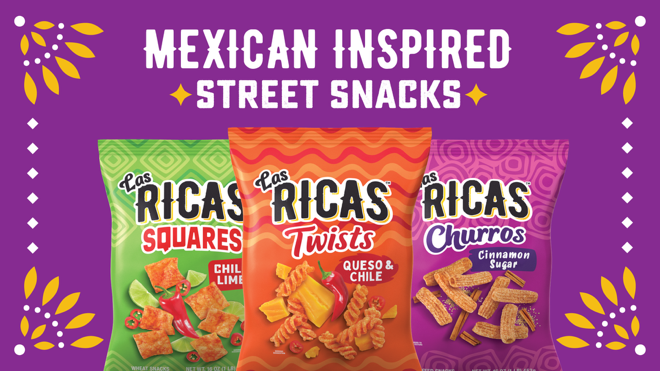
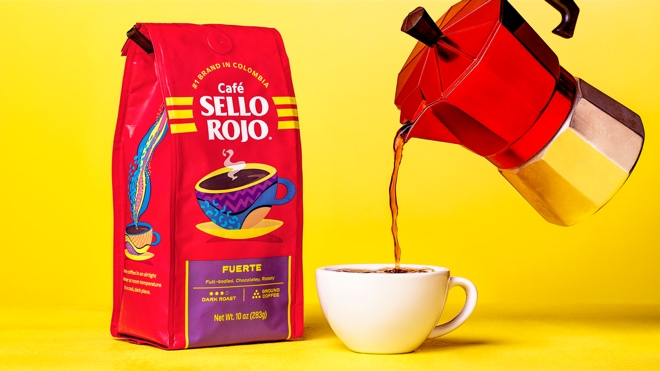
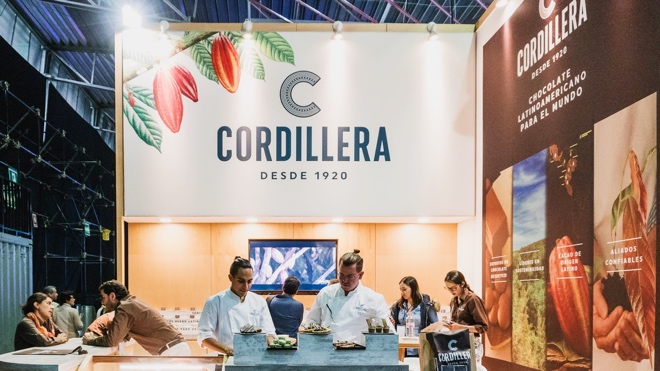
We don't just observe these principles — we build with them.
If you're working to bring Latin American–inspired innovation to the mainstream — or to take a LATAM-native brand further — we'd love to compare notes. Let's talk.
DuPuis is a North American design and innovation firm. Qualitat is our sister studio in Bogotá. We build brands together. From Bogotá to the U.S. shelf, we see cultural signals at their source and shape how they reach the mainstream.
Contact Jon Boeve to schedule a conversation.